With cumulative global incidence of SARS-CoV-2 (COVID-19) estimated to be over 409 million since 2020. Many people are reporting persistent symptoms and or feeling poorly after receiving the vaccine, even boosters.
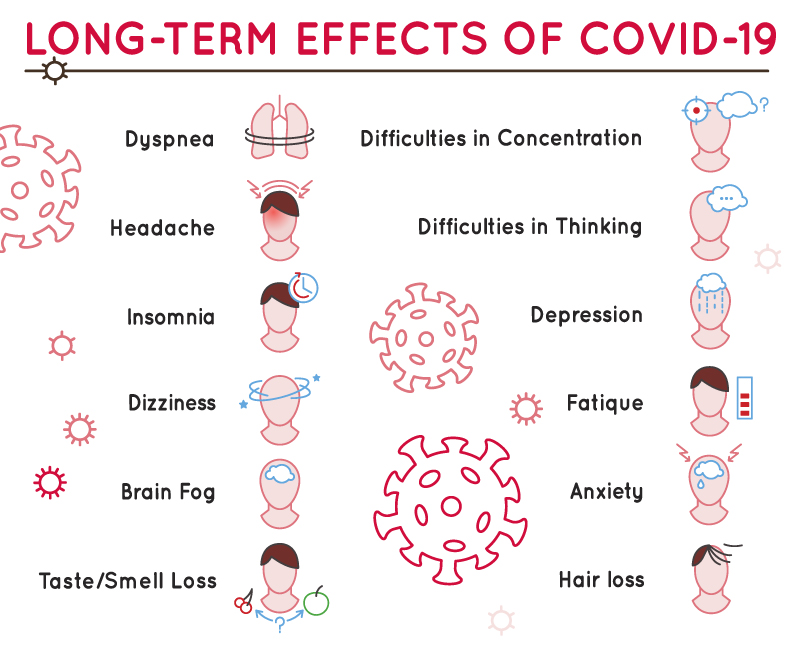
Did any of these start when you may have had COVID or were vaccinated?
Although SARS-CoV-2 primarily affects the respiratory tract, persistent symptoms are known to impact multiple organs and systems, resulting in a range of persistent symptoms not just including respiratory symptoms (such as coughing and difficulty breathing / chest tightness), that’s common, here’s a longer list:
- cardiovascular symptoms (such as chest pain and palpitations),
- exercise intolerance,
- gastrointestinal symptoms (such as diarrhea and constipation),
- anxiety and sleep disturbances,
- cognitive symptoms (such as memory impairment and difficulty concentrating),
- musculoskeletal symptoms (such as joint and muscle pain),
- dermatological symptoms (such as rashes and alopecia—hair loss),
- fatigue and malaise.
Taken together, these lasting health conditions lead to poor quality of life and physical functioning including a detrimental impact on various aspects of meaningful daily activities, including work, study, and interpersonal relationships.
It remains uncertain how and why these symptoms persist and there are many thoughts in the research community. Because there are a number of causes, not one clearly stands out. The possibilities include:
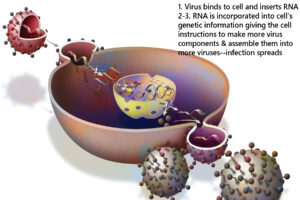
- Residual spike protein (that’s the halo, or corona, around the virus that allows it to attach to and infect cells),
- mRNA-infected cells (this programs cells to make more viral particles and spike protein),
- residual vaccine components including mRNA, and lipid nanoparticles (very small fatty particles thought to enhance vaccine activity—these are so small they can get into the cell nucleus),
- whether an individual experienced SARS-COVID or not, post vaccine syndrome (and especially after one or more boosters) can have very similar symptoms. One thing, whether or not receiving the vaccine can cause components to shed to other people is controversial,
- Alterations in immune cell profiles,
- that the infection was a trigger for an autoimmune situation (the body can attack itself anywhere),
- other viruses already in the body, whether dormant or not, are reactivated,
- that other factors such as prions are affecting the body, especially the brain. Prions are defective proteins commonly made by yeast forms, viruses,
- and, importantly, gut microbiome dysbiosis.
But which one is it??? And how do we find a remedy??? Can prevention or healing start at home?
That’s where the new test kits from Ulan Nutrition Systems come in. I have mine, I have the protocols, and best of all when the right remedy is found and taken the symptoms begin to improve. This is not easily done at home however there are certainly key steps to take to compliment core remedies depending on the source of the problem: Viral particles, Spike protein, Other vaccine additives, residual RNA, something else?
The other clinicians I train with, as well as many clients, report a date coincidence with persistent symptoms and either knowing they had COVID or after receiving the vaccine. Nearly half who have multiple and lasting symptoms look at possible causation even though we can’t specifically assign cause—of course people who don’t have symptoms don’t mention a problem.
From now on, at every Follow-Up or New Client appointment we’ll be checking for this possibility using Nutrition Response Testing and the new Post Pandemic test kit—whether or not you have reason to believe there has been an exposure.
Heal the gut
Of great interest is alterations to the gut microbiome– a diverse community of microorganisms (i.e., bacteria, viruses, fungi, archaea) that reside along the gastrointestinal tract and play roles in immunity, defending against pathogens, and supporting nutrient metabolism. Elevated disease-causing bacteria (pathogenic) and decreased beneficial bacteria are involved in diseases of many organs and systems including inflammatory bowel disease (IBD), irritable bowel syndrome (IBS), colorectal cancer, obesity, type 2 diabetes, psychiatric disorders, and neurodegenerative disorders. Additionally, while all of us have yeast populations living in our gut, they need to be in a beneficial form rather than the form that can sneak out of the gut and invade other organs and systems.
There are at-home steps you can and should take to address a gut healing program by encouraging beneficial bacteria. As for buying probiotics, in clinical trials, some worked and some did not.
Call me for a gut health / microbiome evaluation and program 907-222-1824
Dissolve the spike protein and prions
Specific enzymes (but not all) will do this for you. Both Standard Process and Allegany Nutrition Systems have blends depending on the type of enzyme we need.
Improve antioxidant status:
- While there are several good clinical trials exploring Omega-3 Fatty Acids and/or Coenzyme Q10, these must be taken in the right amounts and often with other nutrients that make them work.
- Coenzyme Q10 (CoQ10) supports mitochondrial function, where all cells produce energy. This is often impaired in Long COVID. As a critical element in mitochondrial energy production, CoQ10 helps alleviate symptoms of fatigue and muscle weakness, indirectly aiding cognitive recovery by enhancing physical endurance and reducing oxidative stress.
- Antioxidants, especially from food, and digestive enzymes individualized for you must be combined with eliminating inflammatory foods—see Nutrition Response Testing for my methods that I love to combine with a functional evaluation of basic lab tests.
Call me for a viral / spike protein evaluation and program 907-222-1824
In The Long COVID Series:
Respiratory viruses (including Flu, COVID, and rhinovirus) Medical guidelines? Are they working?
Beyond the Battle: Fixing the Effects of Long COVID, Vaccine-related Symptoms, and Even Seasonal Flu
Spike proteins and long COVID: A deeper dive and hope
The Long COVID dilemma: Emerging Insights Changing Lives—Breakthrough Testing
Boost Your Immune System; Here’s How to Defeat Corona VIruses (COVID-19) and Flu Viruses Naturally
As a specialized Nutrition Response Testing practitioner, see me right away to benefit from this incredible updated procedure. Call 907-222-1824
References:
Bhattacharjee, B., Lu, P., Monteiro, V.s. et al. (2025) Immunological and Antigenic Signatures Associated with Chronic Illnesses after COVID-19 Vaccination. British Medical Journal (Yale), Preprint at medRxiv 2025.02.18.25322379
Lau, R. I., Su, Q., & Ng, S. C. (2025). Long COVID and gut microbiome: insights into pathogenesis and therapeutics. Gut microbes, 17(1), 2457495.
Li, X., Fu, Y., Yu, T., Song, R., Nie, H., & Ding, Y. (2025). Anti-Oxidant, Anti-Inflammatory and Antiviral Properties of Luteolin Against SARS-CoV-2: Based on Network Pharmacology. Pharmaceuticals (Basel, Switzerland), 18(9), 1329.
Livieratos, A., Gogos, C., & Akinosoglou, K. (2024). Beyond Antivirals: Alternative Therapies for Long COVID. Viruses, 16(11), 1795.
Sartini, M., Del Puente, F., Oliva, M., Carbone, A., Bobbio, N., Schinca, E., Giribone, L., & Cristina, M. L. (2024). Preventive Vitamin D Supplementation and Risk for COVID-19 Infection: A Systematic Review and Meta-Analysis. Nutrients, 16(5), 679. https://doi.org/10.3390/nu16050679
Scarpellini E, Balsiger LM, Maurizi V, Rinninella E, Gasbarrini A, Giostra N, Santori P, Abenavoli L, Rasetti C. Zinc and gut microbiota in health and gastrointestinal disease under the COVID-19 suggestion. Biofactors. 2022 Mar;48(2):294-306. doi: 10.1002/biof.1829. Epub 2022 Feb 26.
Stefano, G. B., Büttiker, P., Weissenberger, S., Anders, M., Raboch, J., Ptacek, R., & Kream, R. M. (2023). Potential Prion Involvement in Long COVID-19 Neuropathology, Including Behavior. Cellular and molecular neurobiology, 43(6), 2621–2626.
Yang, Y., Islam, M. S., Wang, J., Li, Y., & Chen, X. (2020). Traditional Chinese Medicine in the Treatment of Patients Infected with 2019-New Coronavirus (SARS-CoV-2): A Review and Perspective. International journal of biological sciences, 16(10), 1708–1717.
Leave a Reply
You must be logged in to post a comment.