
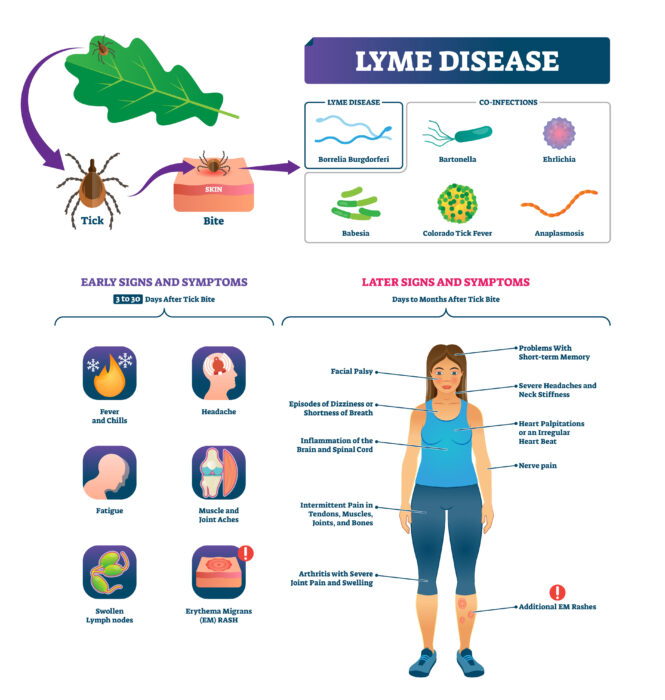
Lyme disease was first formally recognized in 1975, following a mysterious outbreak of arthritis in Lyme, Connecticut. Not until 1981 was the causative bacterium identified: Borrelia burgdorferi bacteria carried by deer ticks. In nearly the same timeframe, various antibiotics were tested (antibiotics *only* work on bacteria. Not viral, yeast, or parasitic infections) and two have become standard treatment protocols, doxycycline and amoxicillin, but only if treated immediately after the tick bite—in other words, preventive.
My journey with Lyme and that of my best friend’s started when we were bit in 1969, well before Lyme was on anyone’s radar much less had a name. Our mom’s had never seen anything like the rashes and none of us connected that to a tick. In New England, ticks are a common late spring/summer problem. Our moms were of the “let’s wait and watch camp”. Of course, after some weeks, the rashes go away.
For decades, I wasn’t the athlete I could have been with joint aches, rapid exhaustion, quick to weaken; also weird skin rashes. Although I stayed active anyway, my friend faired far worse, rapidly decaying and given a serious of other diagnoses such as Celiac disease, Thyroid, SIBO, Candida, over 60 food allergies, she gained a ton of weight, and sometimes was so sick she stayed in bed, and much more. Doctors simply could not figure out what was wrong with her, and I didn’t suspect much on my side because my symptoms were so mild.
Although I have much more natural and non-gut-disruptive remedies for everything else, and I certainly prefer to avoid antibiotics, today I tell everyone I know who is bitten by a tick with or without a bullseye rash that can take some time to appear, 3-30 days averaging 7 days, or notices the tell-tale bullseye even if they’ve not noticed the tick, please immediately go to their doctor or a walk-in clinic, describe what happened, show them the bullseye if there is one, and request appropriate antibiotics. Don’t take chances. Keep in mind that not everyone develops a rash, only 70-80%, and some people may not notice symptoms right away.
Early Lyme disease symptoms are easily missed or confused with other illnesses. This is from the Centers for Disease Control (CDC):
Early signs and symptoms (3 to 30 days after tick bite)
- Fever, chills, headache, fatigue, muscle and joint aches, and swollen lymph nodes may occur in the absence of rash
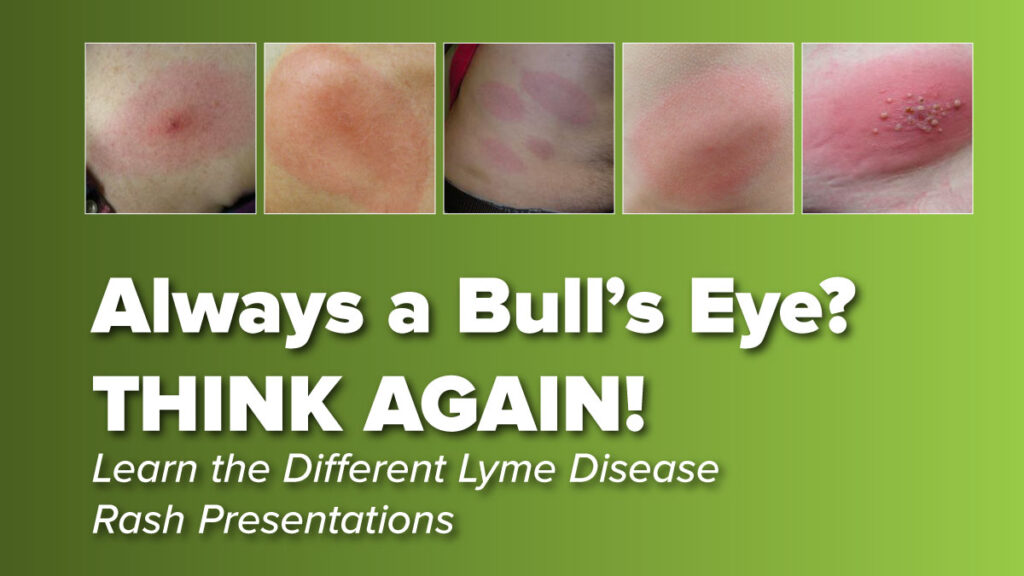
- Erythema migrans (EM) rash (see photos):
- Occurs in approximately 70 to 80 percent of infected people
- Begins at the site of a tick bite after a delay of 3 to 30 days (average is about 7 days) for those who get the rash
- Expands gradually over several days reaching up to 12 inches (30 cm) or more across
- May feel warm to the touch but is rarely itchy or painful
- Sometimes clears as it enlarges, resulting in a target or "bull's-eye" appearance
- May appear on any area of the body
- Does not always appear as a "classic bull's-eye" rash (click the image above or go here)—rarely, and importantly, the rash can appear as blisters, even with a crust, and be misdiagnosed as herpes simplex or herpes zoster (shingles). Worse, you may be told "we don't have Lyme here."
Later signs and symptoms (days to months after tick bite)
The Lyme spirochete can cross the blood brain barrier producing any number nervous system malfunctions:
- Severe headaches and neck stiffness
- Additional EM rashes on other areas of the body
- Facial palsy (loss of muscle tone or droop on one or both sides of the face)
- Inflammation of the brain and spinal cord
- Nerve pain
Lyme disease can affect any part of the body. These are common:
- Arthritis with severe joint pain and swelling, particularly the knees and other large joints.
- Intermittent pain in tendons, muscles, joints, and bones
- Heart palpitations or an irregular heartbeat (Lyme carditis)
- Episodes of dizziness or shortness of breath
- Shooting pains, numbness, or tingling in the hands or feet
Notice these symptoms can also overlap with other common conditions—anything that causes an immune response; meaning anything our bodies see as foreign including, toxic chemicals, metals, inflammatory foods, mold. Go beyond physical stressors, there are many types of situations that cause emotional stress—and will suppress or overcharge the immune system allowing the physical stressors to go unmanaged and Lyme disease symptoms to return. See below for more.
My holistic and natural approach to addressing Lyme disease
Before I dive into what I actually did to get and keep Lyme disease in remission 54 years after finding the reason I had these symptom patterns (not sure getting rid of it completely is possible after five and a half decades), I want to start with some more general thoughts. Please realize that what works for one person does not work for everyone. I truly feel certain pieces need to be addressed whether or not you choose a course of immediate antibiotics after a known bite or rash. Yes, antibiotics are aggressive and not especially natural; with Lyme disease there is definitely a place for them immediately after infection or possible infection.
-
Kill the Lyme bacteria and any co-infections
There is no way to address the full wrath of Lyme without taking steps to kill *all* the microbes that now live in your body. In addition to Borrelia burgdorferi bacteria, most of us typically have dozens of co-infections: Parasites, and viruses that have all made their home in a depleted body and/or came along with the tick bite. While there are various killing protocols that can be used, including herbals, homeopathics, whole food remedies, even ozone… it is vital to start a course of antibiotics as soon as possible after a tick bite or noticing an Erythema migrans (EM) rash.
And... While killing we need to also address the stressed organs and systems.
I never myself used antibiotics to kill Lyme Why? Bit at age 8 and not diagnosed until I was 52, it was too late for antibiotics. They are only effective in early stages of infection. Plus antibiotics will not address other common co-infections: Viruses and parasites. I have been in complete remission since my age 52 diagnosis and holistic care.
-
Remove all toxic substances—address all pieces, not just killing
A huge piece of healing from Lyme is to address both the toxic compounds that come from a healthy immune response as well as environmental ones that may prevent a proper immune response. Whether an immune response or environmental, both will make a person feel sick.
Environmental includes all things that stress the body:
- Toxic chemicals and/or metals;
- Incompatible foods, especially non-nourishing ones;
- Lyme and its coinfections plus any other microbiome imbalances—viruses, yeast imbalances (common after antibiotics), other bacteria, parasites from any source;
- Any aftermath of COVID/Long COVID;
- mold exposures…
All of these create imbalances and can create dysfunction of any and all of your organs and systems. The more we clean out, and keep our bodies clean, the less pathogens want to live in us while the more favorable, helpful, bacteria, yeast and viruses contribute to our health.
I routinely check for all of these using Nutrition Response Testing as this is such a key piece of recovery.
Then I find remedies to improve various system health: Antioxidants, immune support, support for key organs, and more. Very individualized because we are all different; different organs and systems are affected differently in each individual.
-
Balance the immune and nervous systems
Immune and nervous system balance is often overlooked. At the end of the day, Lyme attacks our immune system and depletes it. Lyme loves to live secretly in our nervous system—mine took up residence in my spinal cord.
According to study published in the National Institutes of Health B. burgdorferi can spread from the tick bite on the skin and subsequent rash (stage 1), to various secondary organs throughout the body, including heart, joints, and peripheral and central nervous system (CNS)(stage 2).
It really comes down to getting our immune system to work right again and supporting it to do so. Again, I used Nutrition Response Testing to work out an individualized plan, for everything that is impacting immune function.
Why is it so hard for the immune system to attack the Lyme Borrelia burgdorferi?
They hide. They suppress the immune system. These two are key, there are others.
How do they hide? Three key ways:
- Reducing certain proteins on cell surfaces that help alert the immune system to cells that are infected and defective,
- Limiting the immune system processes that neutralize, destroy, or clear harmful pathogens and abnormal cells, or
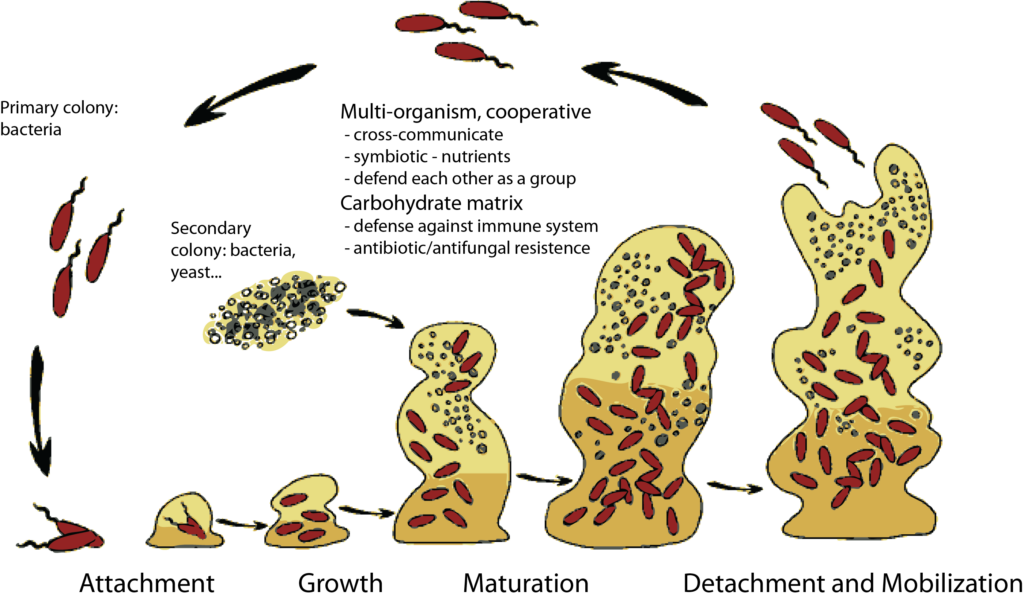
- Hiding in less accessible compartments by setting up a biofilm around the spirochete colonies—usually comprised of starch/sugars, proteins, fats, and even DNA.
The last is the most common. The Lyme spirochetes create a protected and confined space. In it, there is not much exchange for food. When food runs out the Borrelia leave their biofilm to find new locations and set up a new biofilm. With the bacteria now in circulation, and your immune system compromised in other ways, Lyme disease symptoms can reappear.
This is the cycle of creating and leaving a biofilm:
It also comes down to the nervous system.
There are alternate ways for the spirochetes to reach the central nervous system after entering from a tick bite on the skin: either through the bloodstream or migrating along the peripheral nerves or lymph system. Regardless of which system carries them to the central nervous system, the spirochete shape helps Borrelia burgdorferi migrate through the blood brain barrier and enter brain cells.
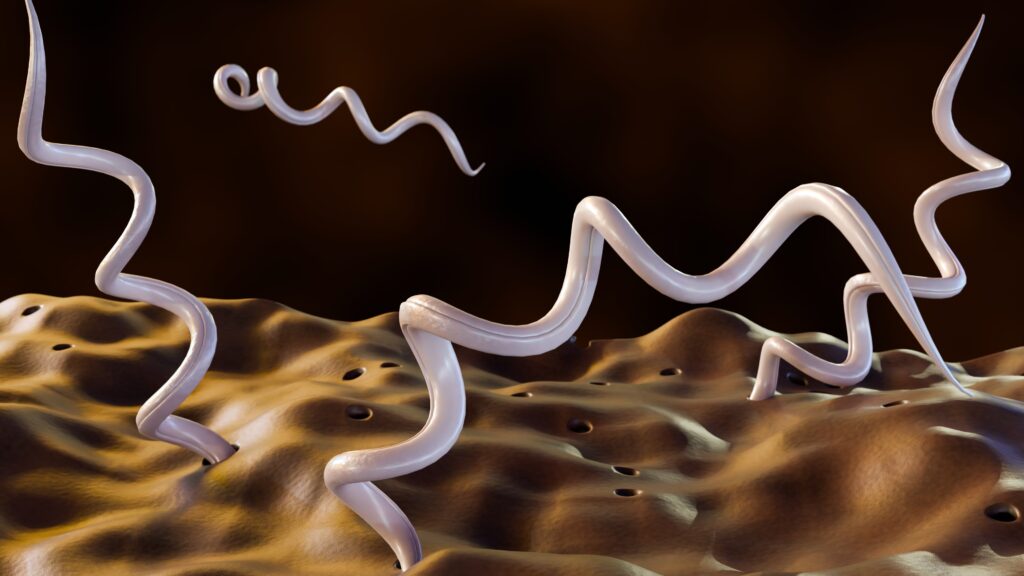
Our brains have their own immune system. Once in the brain, this immune system makes inflammatory compounds (for those who want to know: IL-6, IL-8, IL-12, IL-18, or interferon (IFN)-γ).
Inflammation of the brain can cause:
- radicular pain, experienced as a sharp, shooting, or burning type of discomfort that radiates outward from the spine into limbs;
- meningitis leads mainly to headache and facial nerve palsy, often on one side of the face only;
- a rare immune system disorder that damages nerve roots and peripheral nerves, most commonly known as Guillain-Barré syndrome (GBS) or its chronic form (CIDP). Key features include muscle weakness, loss of reflexes, and tingling sensations;
- paresis—muscle weakness or partial paralysis where a person can still move the affected leg and/or arm muscles, but with less strength than normal, can be limbs on one or both sides;
- paresthesia is an abnormal skin sensation like tingling, numbness, or burning, commonly known as "pins and needles".
- Fatigue
- Decline in cognitive function, memory loss
-
Correct all diet / gut imbalances—“leaky gut” = microbiome disturbances = brain inflammation
-
One of the most important items on my holistic and natural approach to Lyme disease is something you can do with your choices: What you choose to eat.
Individual diet is critical to healing and staying in remission. Food is medicine; the sooner we see how vital it is to remove inflammatory foods and replace with nourishing ones, the better we will feel, faster we start to heal, and longer we stay in remission.
It is absolutely critical to eat a clean diet! If you have Lyme or an autoimmune condition or both (common) you should definitely be grain free, sugar free and dairy free at the very minimum, permanently. After 30 days, if there doesn’t seem to be much improvement; go legume free and nightshade free for a minimum of 30 more days.
And if you truly want to find out your main inflammatory foods, specifically so you can address those—and not restrict others—come see me for a more detailed Nutrition Response Testing check.
A great place to start is to eat far more plants and far fewer starchy foods than the (SAD) Standard American Diet. Note: A plant based diet does not mean zero meat, fish, or eggs. It does mean eat plenty of veggies, 1/3-1/2 your plate should be vegetables—in the starch category, some potatoes are quite nourishing, choose the small colored ones; avoid the large baking potatoes. Either way, these are starches and should form a small part of your plate. By vegetables is meant leaves, stems (e.g. celery), flowers, and the traditional concept of tomatoes, cucumbers (even if these are fruits LOL), string beans, peas…
Choose healthy fats; don’t worry about cholesterol-free or low-fat! These usually have added sugars to “make up for” the satisfaction these fats provide. Your immune system, nervous system and body need protein, cholesterol and healthy fats to heal.
Cholesterol and fats form major components of all cell membranes—when it comes to your nervous system, both central and peripheral, nerve cell membranes act as insulation to allow the nerve impulse (basically an electrical current) to flow. These also need adequate B vitamins, which means adequate meat, fish, and eggs along with proper digestion. Plant based healthy fats are coconut oil, olives and their oil, (you can cook with these two), avocado and its oil, walnut oil, flax oil (these are unstable in heat which has nothing to do with “flash point”, the temperature where it smokes. With heat, the omega-3 and omega-6 fats are unstable and can become trans fats.
Ideally, eat pasture raised eggs, grass fed beef, pastured chicken, wild caught fish and game as much as you can. I feel much healthier when I do, more energy especially, it is worth the investment over cheap, subsidized, commercial… yuck.
I highly suggest looking into the Autoimmune (this post has a meal plan with links to my recipes) or even Autoimmune Paleo (AIP) approach; both remove most inflammatory foods, as common as they are in our world. AIP makes a huge difference for many, many health situations—it’s not just for those with an autoimmune situation.
In addition to diet, it is vital to work on healing your gut, and addressing issues such as candida, small intestinal bacterial overgrowth (SIBO) and other potential gut imbalances and sources of inflammation. Get a lot of healing bone broth (link is how to make good broth) and a high quality collagen (I carry this) into your diet as well to help your gut lining heal.
To this day I am very careful how I eat as a routine and feel amazing. I created OurNutritionKitchen.com where you’ll find makeovers of our favorites, family and friend tested, from simple to elegant. Try one soon.
-
Address emotional triggers
Often overlooked and vital not to do so, various types of emotional situations provoke Lyme disease flare-ups, even after years of remission and/or increase susceptibility to Lyme infections. Emotions as well as other exposures can cause inflammatory responses that weaken the immune system so that it cannot address Lyme or anything else.
There are two main types of emotional traumas:
- Adverse childhood events (ACEs), negative experiences that occur during the first 18 years of life can affect a variety of illnesses later on in life. ACEs can include various combinations of emotional neglect, physical neglect, household substance use, mental illness, criminal behavior, incarceration, domestic violence (witnessed or directed at them), sexual abuse, and/or parental separation or divorce—especially if a child is exposed to parental animosity toward each other.
- New emotional trauma—all sources, especially divorce/loss of meaningful relationship, major financial change, the barrage of media and “digital overload”, work demands, global uncertainty… Emotional stress or trauma dysregulates the immune system and provokes physical symptom flares. Proper support; mental, spiritual, and physical; can lessen the effects of these.
New emotional trauma and Lyme disease intersect deeply; The physical stress of a tick-borne infection, neuroinflammation, and medical “gaslighting” (which surfaces as “it’s all in your head”, “labs are all ‘in range’, everything’s fine” and other ways to dismiss, minimize, or doubt a your symptoms and concerns) can trigger severe psychological distress, anxiety, depression, and other neuropsychiatric symptoms, especially cognitive issues. These often mimick primary psychiatric disorders.
Childhood emotional stress results in elevated chronic inflammation markers. Lyme disease patients have documented neuropsychiatric and general illnesses associated with persistent immune activation. One immune marker, C-Reactive Protein (CRP, a protein made in the liver) is elevated in individuals with ACEs and can remain elevated as adults, and if both child and adult trauma exists CRP, is elevated even higher placing a hige strain on the immune system. Elevated inflammatory markers like CRP is not just the case for Lyme disease, it is also true of other chronic diseases: COVID-19 (Long COVID), HIV, Herpes symplex 1, Epstein Barr (also called mononucleosis—a herpesvirus that once infected stays for life), among others. This study shows that adverse childhood events (ACE) can lead to chronic illness and autoimmune illness later in life, and can even be passed down through generations.
All forms of emotional stress can physically strain organs and glands (especially the adrenal glands, liver, and/or gut). Nutrition Response Testing (NRT) links emotional imbalances like anxiety, depression, and mood swings to hidden physical stressors, organ dysfunction, and nutritional gaps. By finding these root causes I can recommend dietary strategies that stabilize mental health. With Nutrition Response Testing, I can also identify key supplements that will speed along healing.
Your individualized regimen supports any emotional work you choose, whether faith-based, one of my tools, or any other. I know this sounds completely crazy, but Nutrition Response Testing to support the body makes emotional healing swifter and is one of the most effective remedies I know and still use to this day.
This next part is tricky; although we all want to heal and recover from this wretched illness, we might be subconsciously sabotaging ourselves. Especially people that have been sick a very long time. They may have developed an entire social circle that is their Lyme community. They may fear that if they get better, they will no longer have any community. Maybe you have someone that is your caretaker and not sure how to shift that role, or you haven’t worked in years and not sure what you will do with your life once you get better. These can all be scary thoughts that might be subconsciously sabotaging us. We have to be emotionally ready to heal in order to get better.
The bottom line
These key areas MUST be addressed to get and keep Lyme Disease in remission. We are all individuals; as individuals we each need a unique approach that works for our body, at that time. The approach, will change as our bodies heal. As any coinfections, nutritional insufficiencies, and other stressors get handled, the exact regimen will change—this is a good thing!
Once in remission, the successful actions that created relief can keep relief going and any flare-ups at bay.
There is hope and I can help.
Leave a Reply
You must be logged in to post a comment.