What is methylation?
Methylation is a simple, first-line, broad biochemical process with very complex results because it is involved in nearly every organ and system in the body. This critical process happens trillions of times in every cell each minute. Methylation affects which molecules are made, at what times, and how they act in the body to keep every system in balance—or not.
So what is it? Basically, it is the act of adding or removing a methyl group (that’s -CH3 if you love chemistry) to control how most organs and systems are working. This simple addition onto proteins, enzymes, DNA and other vital cell substances, regulates healing, slows aging, improves cell energy, genetic expression of DNA, liver detoxification, immunity, nervous system function, and so much more.
A good 25 percent of us have genetic variants that causes less efficient methylation; the most common being MTHFR and there are others. The end result of these variants can be over- or under- methylation that makes cellular functions non-optimal.
Why is methylation important?
The body is a very complex machine, with various gears and switches that need to all be “on” or “off” at the right times and in the right amounts for bodily systems to operate optimally. Not only is there methylation, the addition of a small chemical group, there is also demethylation the removal of that group. This is the mechanism that allows the gears to turn and turns biological switches on and off for a host of systems in the body:
|
Over Methylation |
Under Methylation |
|||
| absence of seasonal allergies | obsessive but not compulsive | obsessive compulsive tendencies | seasonal allergies | |
| antihistamine intolerance | non-competitive | strong willed | competitive | |
| sleep disorders | low libido | high libido | ritualistic behaviors | |
| low motivation esp. at school | talkative | poor pain tolerance /fibromyalgia | addictive tendencies | |
| musical/artistic | strong empathy | sparse body hair | perfectionism | |
| post partum depression | dry eyes & mouth | high tears, saliva… | chronic depression | |
| high anxiety | estrogen intolerance | phobias | low serotonin & dopamine | |
| food and chemical sensitivity | adverse reactons to SSRIs, Sam-E, methionine | chronic fatigue | pregnancy eclampsia and/or infertility and/or mscarriages | |
| dementia / Alzheimers | diabetes | |||
What is methylation in the body?
When optimal methylation/demethylation occurs, there is a significant positive impact on many biochemical reactions in the body that regulate many systems, especially:
|
|
 Liver’s 450 functions especially detoxification, immune function, hormone activation/inactivation Liver’s 450 functions especially detoxification, immune function, hormone activation/inactivation |
 Histamine production: Histamine production:Immune Sleep/wake cycles & Cognitive function Stomach acid |
 Cognitive function, memory, and mental health Cognitive function, memory, and mental health
|
 Hormone balance through childbearing years, menopause, andropause Hormone balance through childbearing years, menopause, andropause |
 Fat metabolism Fat metabolism |
 Cardiovascular health Cardiovascular health |
 Energy production Energy production |
 Eyesght Eyesght |
Where do the methyl groups come from?
SAMe (S-adenosyl-L-methionine)—a compound made naturally in the body—plays a crucial role in methylation to regulate cell function, repair DNA, and produce hormones (all female and male hormones especially those involved in male-female conception and pregnancy) and neurotransmitters (especially serotonin, dopamine, and norepinephrine). SAMe also is involved in making powerful antioxidants; especially glutathione—considered a master antioxidant. And… glutathione and other antioxidants are vital for detoxification and antioxidant protection—poor antioxidant status will cause undermethylation. In this way, SAMe influences over 100 different chemical reactions through methylation.
Sadly, over methylators are intolerant of additional SAMe and should not be given more through supplements. Doing so will drive even more methylation on an already overactive system. Yet, many individuals choose to take SAMe supplements, despite interactions with other medications used, to manage osteoarthritis, depression, and liver health/cholesterol; herbs and other supplements.
Let’s look at the system that produces SAMe: It is reliant on a critical B vitamin, 5-MTHF (active folate or methylfolate – one of the “methylation vitamins”).
Simply put, if enough folate as 5-MTHF is present, the methylation cycle will work efficiently in most people. Unfortunately, approximately 60% of people in the United States have a genetic mutation that makes it challenging for their bodies to create enough of the methylation vitamin 5-MTHF. Not only do most of us need to supplement this vital B vitamin, it needs to be in the correct form.
There are other sources of methyl groups and specific nutrients to make all sources work. Some can be obtained from supplements if they are the correct form. How do you know whether or not a supplement is in the correct form? It will have the term “methyl” in its name: 5-MTHF active folateB9), methylcobalamin (B12 and as opposed to the cheap synthetic form in supplements called cyanocobalamin), Pyridoxal 5’-phosphate (active B6), riboflavin 5’phosphate (active B2, magnesium, and vitamin D above 55 ng/mL.
When there is not enough of this B vitamin, in the correct form, the methylation switch is turned off. The body isn’t creating enough SAMe and a number of important compounds cannot be efficiently produced, including:
- Glutathione (antioxidant)
- Coenzyme Q10 (CoQ10, energy)
- Melatonin (sleep and immune functions)
- Serotonin (mood)
- Nitric Oxide (pain control)
- Norepinephrine (attention, fight or flight response, anxiety, irritability)
- Epinephrine (fight or flight, increased heart rate, breathing, blood pressure)
- L-Carnitine (made in brain, liver, and kidneys. It helps burn fat for energy)
- Cysteine amino acid—protein synthesis, detoxification, and antioxidant production especially glutathione)
- Taurine (neurological development, cardiovascular function, and fluid balance)
So you can see why there is such a variety of symptoms across different systems.
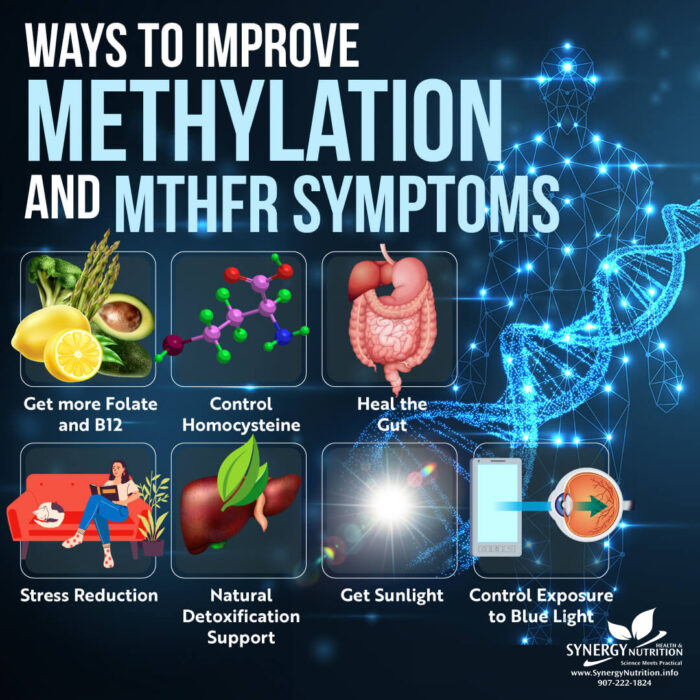
How to improve methylation
Because methylation is tied to certain nutrients, diet plays vital role. An inflammatory diet will decrease methylation while a diet high in antioxidants and specific foods will improve it in both under and over methylators. Unlike medications and many synthetic supplements that force the body to react in certain ways, a body will take what it needs and use it how it needs. That’s why I carefully select the supplements I offer and use Nutrition Response Testing to determine each individual’s regimen for that layer.
In addition to a healthy, whole-food, non-processed food diet, “detoxing” your home, and other lifestyle steps, make sure you eat a lot of these foods:
- For glutathione and other antioxidants: a high quality, pure whey protein; avocado; salmon; cruciferous veggies like broccoli, Brussels sprouts; spinach and other green, leafy vegetables; papaya; green tea; cucumber; asparagus; ginger and turmeric.
- Betaine (anhydrous, not HCL that is used to improve stomach acid—although doing so improves the activity of B vitamins, especially B12). Choose pseudo-grains (quinoa, buckwheat, amaranth), some vegetables (beets are most high, spinach, then potato—choose the small colored ones, Idaho have very little, asparagus, cabbages, carrots, zucchini, green & red peppers), shiitake mushrooms, some fruits (grapes, blueberries, strawberries, grapefruit, peaches, watermelon, prunes, kiwi—trace, pear—trace), meats especially chicken and livers, grass-fed beef, lamb, the majority of seafood, and… black coffee. Betaine can also be made from choline.
- Choline foods from highest to lowest: beef liver, eggs, chicken and livers, fish, organic soy and other beans, shiitake mushrooms, potatoes, and cruciferous vegetables like broccoli and Brussels sprouts.
- CoQ10: Organ meats especially kidney, liver; fatty fish like sardines, salmon, trout, mackerel; meats especially pastured chicken, grass-fed beef, local pork, wild game; vegetables like spinach, broccoli, cauliflower; fruits especially strawberries; legumes: organic nonGMO soybeans, lentils, peanuts; other seeds and nuts especially sesame, pistachios followed by almonds and walnuts.
- Serotonin: As an amino acid, tryptophan, is converted to the mood neurotransmitter serotonin when there are enough B6, B12, usable iron, and omega 3 fats, we look to top sources of tryptophan and ensure plenty of these other nutrients. Tryptophan foods include turkey, chicken, eggs from pastured hens, wild caught salmon, walnuts, pumpkin seeds.
- Nitric Oxide (NO): While there are foods to improve NO: High nitrate foods like beets, spinach, arugula, watermelon; increase all antioxidants (see above) to prevent NOs degradation. It is also important to get plenty of exercise (any activity will do as long as it increases circulation); nasal breathing also helps as does sauna with the traditional Finish sauna being best as far infrared doesn’t penetrate the skin; eliminate commercial mouthwash.
- Adrenal hormones (both adrenalin/noradrenalin and sex hormones): Foods that support this are high in Vitamin C (meaning you get the full C complex rather than just ascorbic acid). These foods are bell peppers, broccoli, kiwi, citrus fruits except oranges (too hybridized); foods high in magnesium are all plants and especially leafy greens, avocados, almonds and pumpkin seeds; B vitamins especially, B12 (see above and ensure adequate stomach acid) and healthy fats like olive oil, unheated avocado oil, fatty fish like wild caught salmon, sufficient protein (most of us don’t get enough)… minimally 7-8 hours of sleep nightly and some manner of stress management as your adrenal glands manage the overall stress response—whether to any infection or microbiome imbalance, toxic chemical or metal exposure/accumulation, inflammatory foods—for most of us that’s cane, corn and agave sugars; grains from the grass family plants like wheat, corn, rice, oats, rye, barley…, and dairy. Note: eggs are poultry not dairy.
There are also certain herbs known as adaptogens that help balance hormones and adrenal function. It is not wise to guess about herbs without professional guidance and professional understanding of how they are likely to shift hormones.
- For choline: choline—meat, poultry, fish, dairy products, and eggs [4,5,8-10]. Cruciferous vegetables and certain beans are also rich in choline, and other dietary sources of choline include nuts, seeds, and whole grains.
- Carnitine to help burn fat: Very few plants have carnitine, this is a carnivore nutrient. Grass-fed beef, pork (find a local source—non-commercial), chicken, eggs from pastured chickens, hard cheese—preferably from raw milk. Food sources have a far greater absorption rate than supplements. Because the amino acids methionine and lysine can be made into carnitine by the body, methionine foods are all meats and fish from grass-fed or wild caught sources, Brazil nuts, sesame seeds, quinoa; lysine foods include: Again, high protein animal foods, with plant-based foods including lentils and nuts. Soy is also a good source of lysine and it absolutely must be organic (non-GMO) and any soy products (tofu, tempe, wheat-free soy sauce) ideally would be fermented.
Lifestyle changes include:
- Engaging in regular physical activities
- Avoiding excessive alcohol consumption
- Quitting smoking
- Avoiding excessive coffee consumption (not more than 5 cups daily), even if some is good (if black) as an antioxidant and source of anhydrous betaine.
What are the vitamins needed for healthy methylation?
Once your 5-MTHF status is addressed, the body also needs several other nutrients for methylation to function optimally.
Several nutrients support methylation by directly donating a methyl group. For the most part, the answer to which are the methylated vitamins and other nutrients is obvious because the word “methyl” is in the nutrient’s name, such as 5-methyltetrahydrofolate (5MTHF; active folate), methylcobalamin (active B12), dimethylglycine (DMG; derivative of the amino acid glycine), and trimethylglycine (TMG; betaine).
Trimethylglycine is one of the most important methyl donors because, as its name implies, it has three methyl groups to donate. Other, although less obvious, methyl donors include choline and methionine. Other methylation support nutrients that are necessary cofactors in methylation include vitamins B2 and B6, vitamin D, and magnesium.
Proper methylation influences so many systems in our bodies that it often gets overlooked, which can severely impact how well our bodies functions. Ask me for advice if you have any concerns about what methylation is and what you can do about it, especially if you know you have a MTHFR variant.
References
Dobrijević, D., Pastor, K., Nastić, N., Özogul, F., Krulj, J., Kokić, B., Bartkiene, E., Rocha, J. M., & Kojić, J. (2023). Betaine as a Functional Ingredient: Metabolism, Health-Promoting Attributes, Food Sources, Applications and Analysis Methods. Molecules (Basel, Switzerland), 28(12), 4824.
Krolevets, M., Cate, V. T., Prochaska, J. H., Schulz, A., Rapp, S., Tenzer, S., Andrade-Navarro, M. A., Horvath, S., Niehrs, C., & Wild, P. S. (2023). DNA methylation and cardiovascular disease in humans: a systematic review and database of known CpG methylation sites. Clinical epigenetics, 15(1), 56.
Menezo, Y., Clement, P., Clement, A., & Elder, K. (2020). Methylation: An Ineluctable Biochemical and Physiological Process Essential to the Transmission of Life. International journal of molecular sciences, 21(23), 9311.
Otteson D. C. (2011). Eyes on DNA methylation: current evidence for DNA methylation in ocular development and disease. Journal of ocular biology, diseases, and informatics, 4(3), 95–103.
Saini R. (2011). Coenzyme Q10: The essential nutrient. Journal of pharmacy & bioallied sciences, 3(3), 466–467. https://doi.org/10.4103/0975-7406.84471
Zong, F. F., Jia, D. D., Huang, G. K., Pan, M., Hu, H., Song, S. Y., Xiao, L., Wang, R. W., & Liang, L. (2025). New perspectives on DNA methylation modifications in ocular diseases. International journal of ophthalmology, 18(2), 340–350.
Leave a Reply
You must be logged in to post a comment.